
On-Board Weighing: Save Fuel, Stop Overloading and Improve Vehicle Efficiency
For businesses that rely on trucks, trailers, agricultural machinery and mobile equipment, knowing exactly how much you are carrying can make a major difference to productivity and operating costs. On-board weighing systems provide real-time information about payload, helping operators load vehicles more efficiently, reduce the risk of overloading and make better use of every trip.
From agriculture and construction to logistics, waste management and mining, accurate payload information can improve day-to-day decision-making. Instead of relying on guesswork or making repeated trips to a weighbridge, operators can monitor load weight directly on the vehicle or equipment.
At Load Sensors Australia, we provide weighing solutions designed for demanding mobile and industrial applications, including a range of on-board weighing kits and vehicle weighing solutions.

What Is On-Board Weighing?
An on-board weighing system is a weighing solution integrated directly into a vehicle, trailer, machine or mobile application. It uses load cells, weighing indicators and related components to measure the weight being carried and provide the operator with live weight information.
Depending on the application, on-board weighing can be used to monitor:
Total payload
Gross vehicle or trailer load
Material loaded or discharged
Individual loading stages
Remaining payload capacity
Weight transferred between equipment
This means operators can make loading decisions at the point where work is taking place.
For agricultural applications, for example, Load Sensors Australia offers on-board weighing kits for applications such as sheep feeders, chaser bins and spreaders. These systems combine precision-engineered load cells with indicators and other components to provide practical weighing solutions for mobile equipment.
👉 Explore the products: https://www.loadsensors.com.au/onboard-weighing-kits
How Can On-Board Weighing Help Save Fuel?
Fuel is one of the major operating costs for transport, agriculture, construction and other industries that rely on heavy vehicles. While an on-board weighing system does not directly reduce fuel consumption, it can help operators load closer to an efficient payload without unnecessarily exceeding vehicle limits.
Here are several ways accurate payload information can support fuel efficiency.
1. Optimise Every Load
Underloading can mean making additional trips to transport the same amount of material. When operators know the actual payload, they can load vehicles closer to the appropriate operating capacity rather than relying on estimates.
More efficient use of each trip can help reduce unnecessary journeys, vehicle hours and associated fuel consumption.
2. Reduce Unnecessary Trips
When the payload is unknown, operators may make conservative loading decisions to avoid exceeding limits. This can result in partially loaded vehicles travelling back and forth more often.
With real-time weight information, operators can make better loading decisions and potentially transport more suitable payloads per trip.
3. Improve Fleet Utilisation
Accurate load data can help fleet managers understand how efficiently vehicles are being used.
For example, weight information can help identify:
Vehicles that are regularly underloaded
Vehicles approaching their operating limits
Routes with low payload efficiency
Equipment that may be better suited to particular loads
Over time, this information can support more efficient fleet planning and resource allocation.
4. Avoid Carrying Excess Weight
Carrying unnecessary weight can increase fuel consumption and place additional demands on vehicle components. Monitoring payload helps operators identify when a vehicle has been loaded beyond the required amount and adjust the load before departure.
The result is better control over the amount of material being transported rather than simply loading “as much as possible.”
How On-Board Weighing Helps Prevent Overloading
Overloading is not simply a compliance issue. It can also affect vehicle safety, maintenance, tyre wear, braking performance and operating costs.
The National Heavy Vehicle Regulator states that heavy vehicles are subject to prescribed mass limits and that operators must consider factors such as manufacturer ratings, gross vehicle or combination mass, axle and axle-group limits, and applicable road restrictions. NHVR also notes that overloading can contribute to road damage and can increase risks related to vehicle components and braking performance.
An on-board weighing system provides an additional layer of visibility by allowing operators to monitor weight while loading.
On-Board Weighing vs Weighbridge: What Is the Difference?
A truck weighbridge and an on-board weighing system both provide valuable weight information, but they serve different purposes.
A weighbridge is generally installed at a specific location and is used to weigh vehicles as they drive onto the weighing platform. Load Sensors Australia offers truck weighbridge solutions including modular, fixed and portable options designed for vehicle weighing applications.
An on-board weighing system, on the other hand, is integrated into the vehicle or equipment and provides weight information where loading and transport activities occur.
Truck Weighbridge
Best suited for:
Fixed weighing locations
Site entry and exit weighing
Commercial vehicle weighing
Gross, tare and net weight measurement
Operations requiring a dedicated weighing station
On-Board Weighing
Best suited for:
Agricultural machinery
Trailers and mobile equipment
Chaser bins
Spreaders
Livestock feeders
Mobile material handling
Applications where weight needs to be monitored during loading or transport
In many operations, the two approaches can complement each other rather than compete. A weighbridge can provide a fixed reference point, while an on-board system provides convenient weight information during daily operations.
Load Sensors Australia On-Board Weighing Kits
Load Sensors Australia offers a range of on-board weighing kits designed for mobile weighing applications. The current range includes solutions for applications such as sheep feeders, chaser bins, spreaders and high-capacity vehicle or container weighing.
These solutions are built around precision-engineered load cells and supporting weighing components, with an emphasis on accuracy, reliability and durability.

Chaser Bin Scale Kit – OWL12
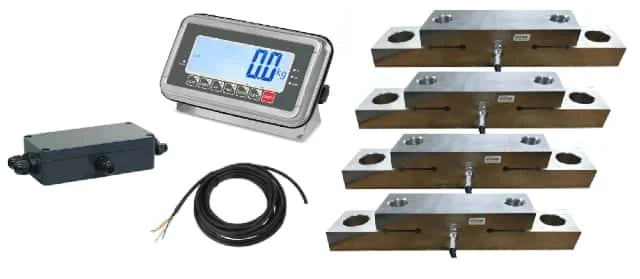
The OWL12 Chaser Bin Scale Kit is designed for mobile weighing applications and includes four OWL12 load cells, a stainless steel junction box, cable and a weight indicator. The kit is available in different load cell capacities and can also be configured for larger setups.
This makes it particularly useful for agricultural operations where accurate payload information can help monitor grain or material movement during harvesting and transport.
Spreader Scale Kit – OVW
The OVW Spreader Scale Kit is designed for onboard and container weighing and uses four or six heavy-duty load cells. The available configurations provide high capacity for demanding applications.
This type of system can help operators monitor material quantity and improve control over payloads during mobile operations.
Spreader Scale Kit – OVW Kit | High-Capacity Onboard Weighing Solution Australia
Why Choose Load Sensors Australia?
Selecting an on-board weighing system is about more than choosing a load cell. The complete system needs to work reliably with the vehicle, environment and application.
Load Sensors Australia provides a broad range of load cells, weighing indicators, weighing accessories, industrial weighing kits, on-board weighing kits and truck weighbridge solutions. This allows customers to source weighing components and systems for a wide variety of applications from one experienced supplier.
The team can help identify the appropriate weighing configuration based on your vehicle type, capacity, installation requirements and operating environment.
Conclusion: Save Fuel, Stop Overloading and Weigh Smarter
An on-board weighing system gives operators something extremely valuable: accurate weight information when and where it is needed.
By providing real-time visibility of payload, on-board weighing can help businesses optimise loads, reduce unnecessary trips, improve fuel efficiency and manage the risk of overloading. It can also support better fleet utilisation, maintenance planning, productivity and data-driven decision-making.
From agricultural machinery and trailers to construction, logistics, waste and industrial applications, the right on-board weighing solution can become an important part of a more efficient operation.
Load Sensors Australia offers a range of on-board weighing kits for mobile applications, as well as truck weighbridge solutions for fixed and portable vehicle weighing requirements.
Ready to improve payload management and reduce the risk of overloading?
📞 Call us today:1300 557 216 to discuss your requirements.
📧 Email sales@loadsensors.com.au for expert advice or a customised quote.
Explore our Onboard Weighing Kits and Truck Weigh Bridge solutions to find the right weighing solution for your application.